

Share capital or contributed capital represents the total financing or value received from the company’s shareholders in exchange for issuing common shares or preferred shares. That is why individuals usually hesitate to invest in companies with negative SE, deeming them to be an unsafe or risky investment option. Nonetheless, while SE is certainly one of the components that can aid investors in gauging a company’s financial health, it is not an absolute or definitive determinant for the same. These four components utilised to calculate a company’s shareholders equity allow investors to gain a better insight into the company’s financial management. Retained earnings refer to the amount that is retained from a company’s profit instead of being paid out to its shareholders as a dividend.

Understanding Retained Earnings in Depth

In contrast, a corporation that has recently purchased many assets, but is unable to operate profitably, may have a market value that is less than its book value. Although we can calculate a corporation’s book value from its stockholders’ equity, we cannot calculate a corporation’s market value from its balance sheet. We must look to appraisers, financial analysts, and/or the stock market to help determine an approximation of a corporation’s https://www.bookstime.com/ fair market value. When it comes to dividends and liquidation, the owners of preferred stock have preferential treatment over the owners of common stock. In other words, preferred stockholders receive their dividends before the common stockholders receive theirs. If the corporation does not declare and pay the dividends to preferred stock, there cannot be a dividend on the common stock.
Why Can’t the US Print More Money?

With various debt and equity instruments in mind, we can apply this knowledge to our own personal investment decisions. Although many investment decisions depend on the level of risk we want to undertake, we cannot neglect all the key components covered above. Bonds are contractual liabilities where annual payments are guaranteed unless the issuer defaults, while dividend payments from owning shares are discretionary stockholders equity formula and not fixed. The book value of equity is essentially the same as SE, representing the net worth of the company attributable to the company’s shareholders after deducting liabilities from assets. It represents the residual interest in the assets of a company after deducting liabilities. The number of preferred shares is usually disclosed in the company’s financial statements under the equity section.
- If all of the company’s assets were liquidated and used to pay off debts, the shareholders’ equity is the amount that would be left over.
- On the other hand, liabilities are the total of current liabilities (short-term liabilities) and long-term liabilities.
- This formula is known as the investor’s equation where you have to compute the share capital and then ascertain the retained earnings of the business.
- Here total assets refer to assets present at the particular point and total liabilities means liability during the same period.
- Learn financial statement modeling, DCF, M&A, LBO, Comps and Excel shortcuts.
Shareholders Equity
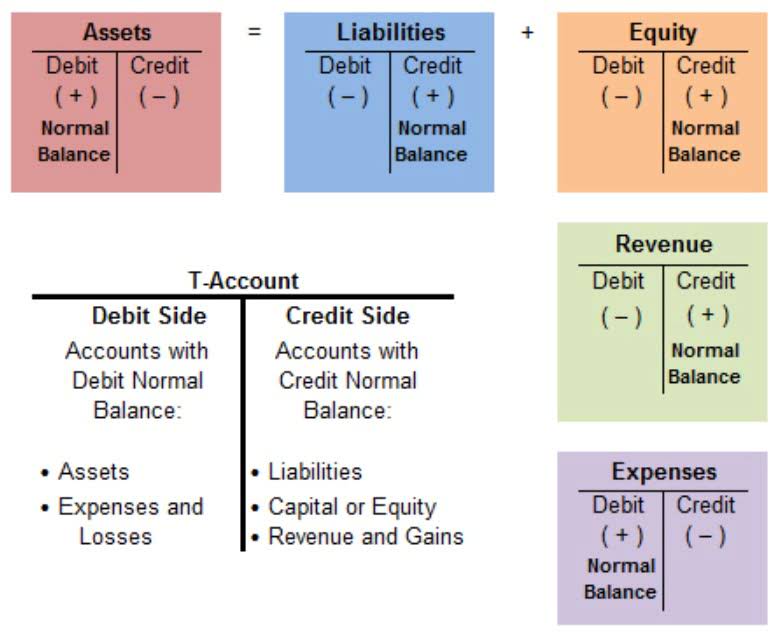
Shareholders’ equity is an important aspect in a company’s financial reports that show What is bookkeeping its actual value. This helps investors decide whether to buy, sell, or hold onto a stock for the long term, looking beyond immediate market changes. Understanding shareholders’ equity is key to assessing a company’s financial strength and value. This equation helps investors understand how much of a company’s assets will be left for shareholders after all debts are paid. Subtract the total liabilities from the total assets to get the shareholders’ equity. Stockholders’ equity represents the owners’ residual claim after liabilities are settled, providing a snapshot of the company’s financial health.
- A positive stockholders’ equity indicates that a company has more assets than liabilities, while a negative balance may signal financial distress or excessive debt.
- Understanding the shareholder’s equity formula is crucial from the perspective of an investor since it shows the true worth of the shareholders investment in the company.
- Private equity is often sold to funds and investors that specialize in direct investments in private companies or that engage in leveraged buyouts (LBOs) of public companies.
- Capital stock is a term that encompasses both common stock and preferred stock.
- The date that determines which stockholders are entitled to receive a corporation’s declared dividend.
Why do equity investors care about shareholders equity
Gain hands-on experience with Excel-based financial modeling, real-world case studies, and downloadable templates. Upon completion, earn a recognized certificate to enhance your career prospects in finance and investment. In terms of payment and liquidation order, bondholders are ahead of preferred shareholders, who in turn are ahead of common shareholders. A few more terms are important in accounting for share-related transactions. The number of shares authorized is the number of shares that the corporation is allowed to issue according to the company’s articles of incorporation.